
Ligaments play a critical role in stabilizing joints, but they can be slow to heal after a sprain or partial tear due to limited blood flow. PRP injections are used to support ligament healing by delivering a concentrated dose of platelets directly into the injured tissue. These platelets release signals that encourage collagen repair and tissue remodeling, which are essential for restoring stability. The procedure is typically performed under ultrasound guidance to accurately target the affected ligament. For some patients, PRP may help strengthen the healing response and improve joint function following ligament injury.

Find doctors offering platelet rich plasma treatment for ligament injuries near you.
This information is educational and not a substitute for professional medical advice. Platelet rich plasma treatments are not FDA approved for all orthopedic uses. Patients should consult a licensed U.S. healthcare professional before pursuing treatment.
Connect with the Best PRP Orthopedic Doctors in Your Area
Explore top-rated PRP providers in your area offering platelet rich plasma therapy for orthopedic conditions, including knee pain, shoulder injuries, and sports related issues. You deserve care that supports lasting relief, improved movement, and a return to the activities that matter most.
Alabama
Alaska
Arizona
Arkansas
California
Colorado
Connecticut
Delaware
Florida
Georgia
Hawaii
Idaho
Illinois
Indiana
Iowa
Kansas
Kentucky
Louisiana
Maine
Maryland
Massachusetts
Michigan
Minnesota
Mississippi
Missouri
Montana
Nebraska
Nevada
New Hampshire
New Jersey
New Mexico
New York
North Carolina
North Dakota
Ohio
Oklahoma
Oregon
Pennsylvania
Rhode Island
South Carolina
South Dakota
Tennessee
Texas
Utah
Vermont
Virginia
Washington
West Virginia
Wisconsin
Wyoming
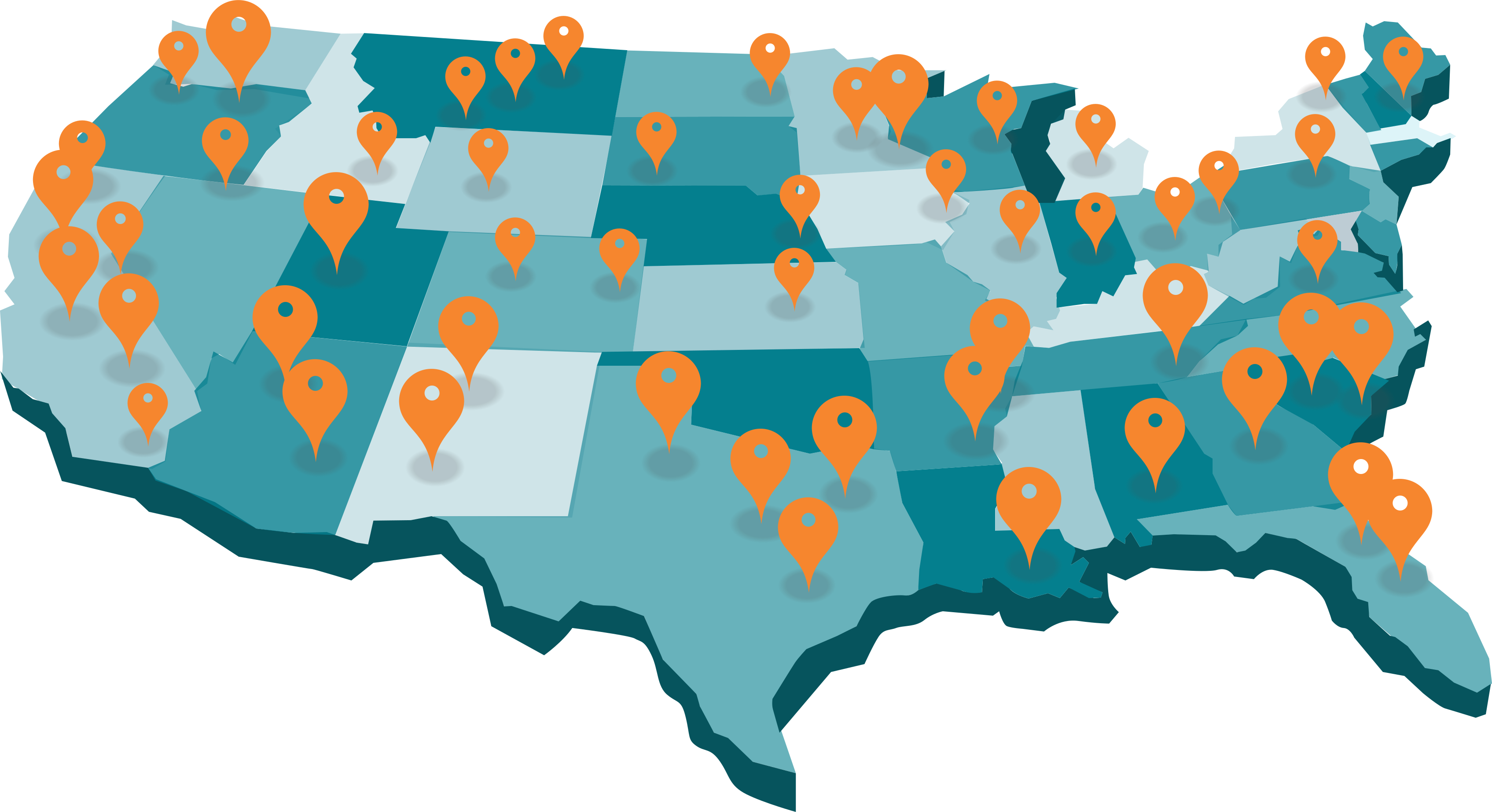
Popular Metro Areas
Atlanta, GA
Austin, TX
Baltimore, MD
Boston, MA
Charlotte, NC
Chicago, IL
Dallas, TX
Denver, CO
Detroit, MI
Houston, TX
Fort Lauderdale, FL
Indianapolis, IN
Kansas City, MO
Las Vegas, NV
Los Angeles, CA
Miami, FL
Milwaukee, WI
Minneapolis, MN
Nashville, TN
New York, NY
Orlando, FL
Palm Springs, CA
Philadelphia, PA
Phoenix, AZ
Pittsburgh, PA
Portland, OR
Raleigh, NC
Reno, NV
Sacramento, CA
San Antonio, TX
San Diego, CA
San Francisco, CA
San Jose, CA
Seattle, WA
Spokane, WA
St. Louis, MO
Tampa, FL
Washington, D.C.